
Este recurso digital documenta la publicación monográfica «Omar Gatica», editada por Morgan Marinetti en marzo de 1991 en Santiago, Chile. El libro constituye un registro fundamental de la consolidación artística del artista.
Contenidos Principales:
Ensayo Crítico de Waldemar Sommer: Analiza la transición del artista desde un neoexpresionismo figurativo hacia una abstracción sugerente. Sommer destaca la «calidez expresiva» y el dinamismo cromático de Gatica, situándolo como una figura clave en la revalorización del oficio pictórico en Chile.
Reflexión del Artista: Incluye un texto personal de Omar Gatica donde repasa los cuatro años posteriores a su primera muestra individual («La inescrupulosa vida que nos susurra en la obscuridad»), describiendo su proceso de «desmenuzar la mancha» hasta encontrar el paisaje imaginario y la persistencia de la esencia humana en su obra.
Catálogo Razonado: Un listado bilingüe (español/inglés) de 41 obras fundamentales producidas entre 1985 y 1991, debidamente catalogadas bajo la nomenclatura oficial de archivo (OG-OBRA-PINT).
Contexto Biográfico: Breve reseña del crítico Waldemar Sommer.
La página ofrece además acceso al documento PDF completo del libro y vincula esta publicación con la exposición individual realizada en la Galería Praxis en 1991.
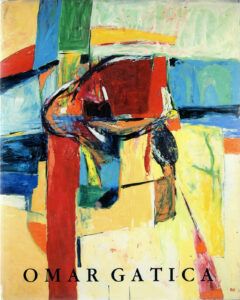
Descargar
Libro Bilingue OMAR GATICA (1991)
Download here

OMAR GATICA (1991)
Transcripción Bilingüe Completa del libro:
Editorial: Morgan Marinetti
Texto / Text: Waldemar Sommer
Traducción / Translation: Francisca Bustamante, Macarena Urzúa, Raquel Richardson
Fotografía / Photography: Patricia Novoa, Carlos Bravo
Diseño / Design: Jaime Peñaloza
Santiago, Chile – Marzo 1991
Ensayo Crítico: Waldemar Sommer
(Español)
Omar Gatica se inserta de lleno en aquella generación de los años 80 que trajo, tanto en el plano internacional como dentro de Chile, una revalorización eficaz del oficio de pintar. Más aún, el grupo de jóvenes autores que la formaron supo comprender —intuitiva antes intelectualmente— la necesidad de retornar el arte a la órbita de lo sensorial a los dominios de la calidez expresiva. La mirada comprometida, documental y fría del mundo, propia de la década del 70, retrocedió, entonces, frente a una visión sin compromisos, poética y subjetiva de la realidad circundante. Al mismo tiempo, se recobraba un medio visual que, para algunos, parecía agotado del todo: la pintura sobre soporte tradicional.
Al igual que muchas otras búsquedas contemporáneas, la inquietud imperiosa y peculiar de manifestarse de aquellos artistas encontró en las fuentes de creación inicial de nuestro siglo el camino más adecuado. Por supuesto, traspusieron esos modelos con independencia y de acuerdo a sus propios requerimientos. Así, el punto de partida fue el expresionismo de los años 30.
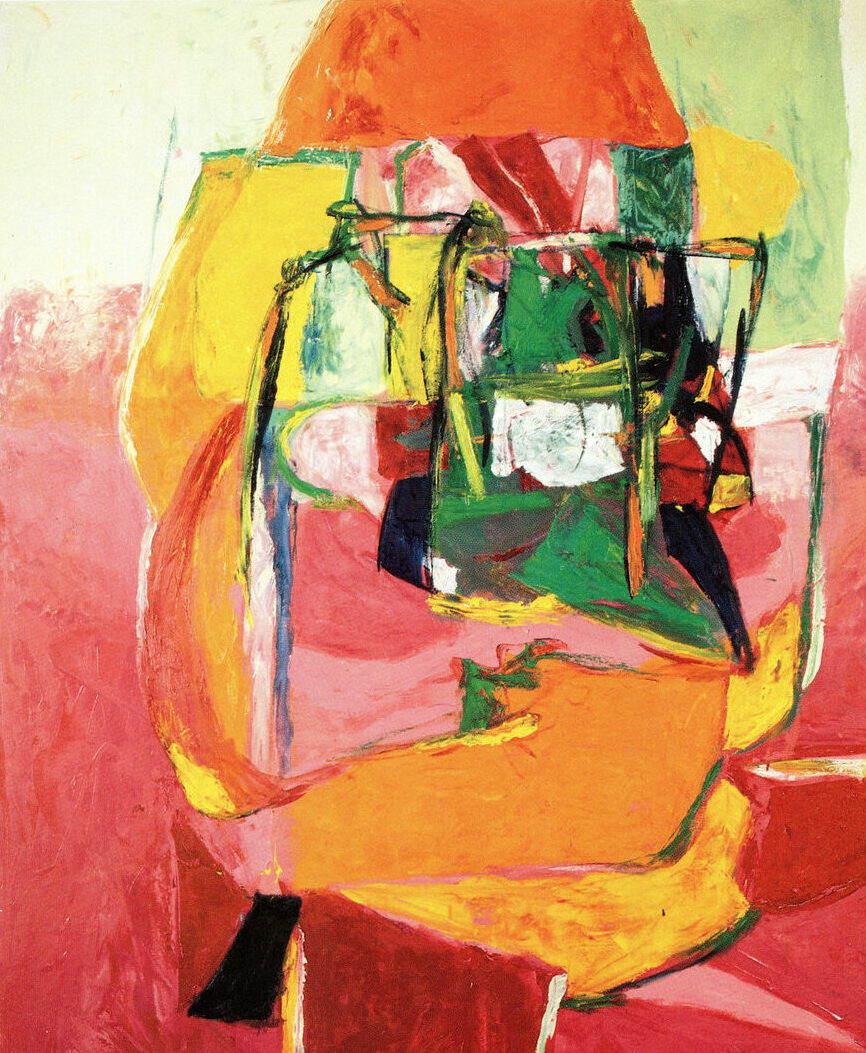
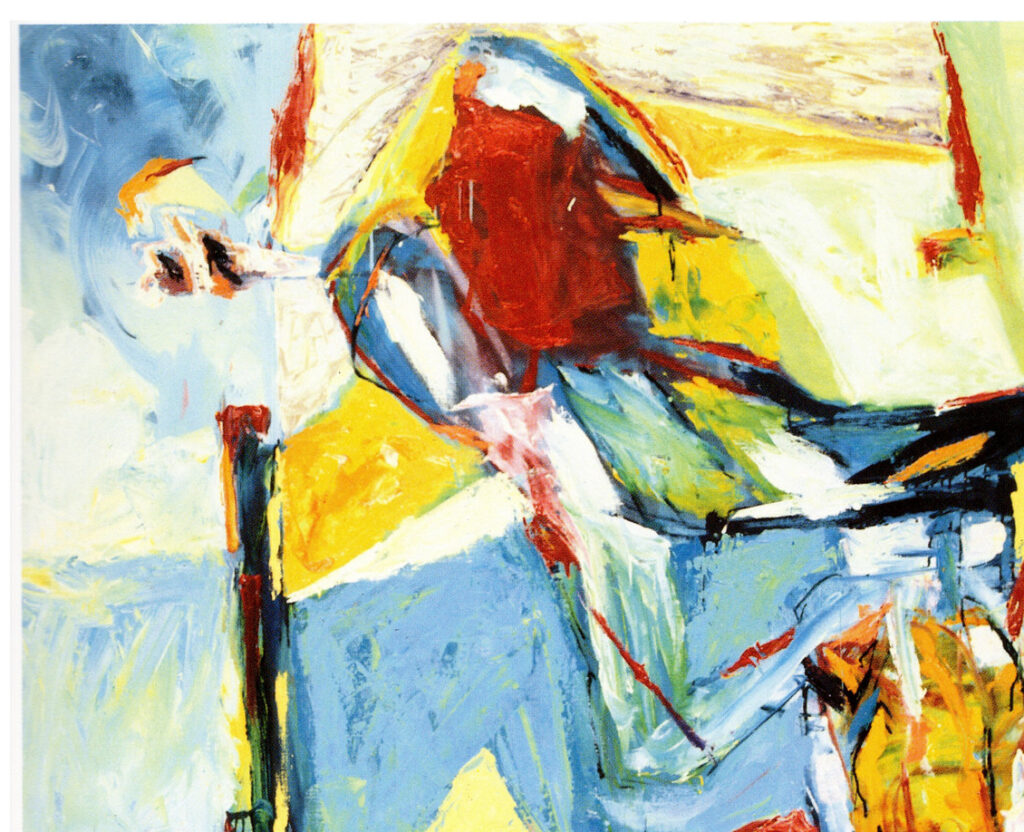
En el caso particular de Omar Gatica, la vía obtenida, el neoexpresionismo, se funde con otra ruta no menos importante y de extensa trayectoria, la abstracción. Es que ciertas soluciones de esta segunda tendencia le permiten a Gatica volcar, en imágenes por sobre todo sugerentes, sus experiencias personales con el paisaje urbano, con la naturaleza muerta, con la figura zoológica o humana, sola o en movidos enfrentamientos. Las preferencias del artista chileno por la discreción, por la insinuación apenas de la forma reconocible, parece, pues, haberse acrecentado durante los años más recientes. De ese modo, sus cuadros se limitan a sugerirnos, nada más, la condición física, el ánimo, las acciones de sus protagonistas, las circunstancias que acechan a cada uno de ellos.
Asomos indudables de violencia se adivinan, a menudo, tras las formas crepitantes, tras las incandescencias del color. Entonces, figuras y entorno tienden a penetrarse mutuamente. Aunque conservando la autonomía indispensable, los empastes de pigmentos invaden, en muchas oportunidades, las coloraciones vecinas. Dan origen, así, a formas muy abiertas, donde no falta tampoco alguna zona traslúcida. La furia con que se aplicó la pasta multicolor coincide, entretanto, con una notoria movilidad formal y cromática. Ese dinamismo, acentuado por golpes de luz ajenos a propósitos figurativos, comunica al espectador el efecto aparente de un lienzo en constante devenir.
Las figuras huidizas de Gatica surgen más explícitas en la tela de ejecución más lejana: «Voltereta I», de 1985, cuyo predominio lineal recoge, acaso, un eco onírico lejano. Asimismo, muestran una proximidad relativa con el mundo reconocible las composiciones de 1987-1989, donde la voluntad neoexpresionista desempeña un rol preponderante. Por ejemplo, la fantasmagoría ritual de «La serpiente emplumada»; la densidad y ferocidad animal de «El no de los niños», «Luna asesina», con la vitalidad de sus pequeños trazos ondulados y con esa especie de Danae neoexpresionista.
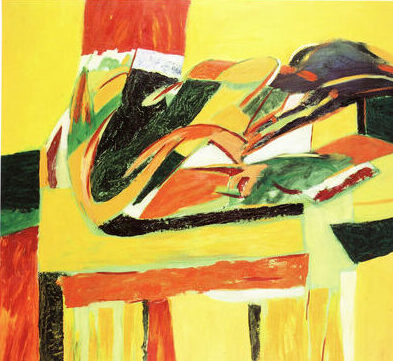
El actual período 1990-1991 aporta, en cambio, una expresividad que se apropia de mayores recursos abstractos. Junto a ello y sin perder nada de su movilidad, la pintura de Omar Gatica adquiere una potencia de formas y una firmeza de composición que halla sus mejores exponentes en obras como «La silla y su entorno», «La tenaza», «El gato», etc. Ahora los ardores expresivos del pintor nos esconden todavía más la figura, en un intento por hacer valer, ante todo, los atributos plásticos de cada tela.
Critical essay: Waldemar Sommer
(English)
Omar Gatica totally inserts himself into the 80’s generation which brought an effective revaluation of the task of painting in an international field as well as in Chile. Moreover, its group of young painters were capable of understanding, intuitively rather than intellectually, the need to bring art back to a sensorial orbit, to the power of expressive warmth. The documental, compromised and cold view of the world-typical of the 70’s- drew back before a poetic and subjective vision without pledge of the surrounding reality. At the same time, a visual means that seemed scarce was recovered: painting over traditional base.
Just as many other contemporary searches, those artists imperious and peculiar restlessness to express themselves found its best means in the source of initial creation of our century. Of course, those patterns were transfered independently and according to their own needs. Thus, their starting point was the expressionism of the 30’s.
In the case of Omar Gatica, the means obtained-the neoexpressionism-combines itself with another course just as important and with a vast trajectory, the abstractionism. The reason being that certain solutions of this second tendency make it possible for Gatica to overturn his personal experiences, especially in suggestive images, with the urban landscapes, the still life, or with the human or zoological figure individually or in active encounters. The preference of the Chilean artist for discretion, for the insinuation of the hardly recognizable shapes, has apparently increased in these last few years. That is why, his paintings only give us an idea of the physical condition, the mood, the actions of his protagonist and the circumstances that follow each one of them.
Oftentimes, doubtless signs of violence are foretold by the crackling shapes, behind the incandescence of the color. Then the figures and its surrounding tend to penetrate each other. In many cases, the impasto of pigment invades nearby colorings, although maintaining the necessary autonomy. Which gives origin to very opened shapes, in which no translucid zone is missed. In the meantime, the fury with which the multicolor paste is applied coincides with a notorious formal and chromatic mobility. That dynamism, stressed by hits of light foreign to figurative purposes, gives the spectator a visible effect of a canvas in constant flow.
The evasives figures of Gatica appear clearer in a more distant performance: «Somersault I», 1985, whose lineal perhaps gathers a distant oniric echo. The compositions of 1987-1989 also reveal a relative proximity with the recognizable world, where the expressionist’s desire performs an important role. For example, the ritual phantasmagoric of «The Feathered Snake», the animal density and ferocity of «The Children’s No», «Murderess Moon», with the vitality of its little undulating strokes together with a type of neoexpressionist Danae.
On the other hand, the actual period (1990-1991) presents an expressivity that appropriates of greater abstract resources. At the same time and without loosing its mobility, the painting of Omar Gatica acquires power of shapes and steadiness of composition which can be best appreciated in works such as: «The chair and Its Surrounding», «The Nipper», «The Cat», etc. The painter’s expressive ardors hide the figure from us even more, emphazising-above all- each canvas’ plastic qualities.
Waldemar Sommer Santiago, Marzo / March 1991
Texto del Artista / Text by the Artist: Omar Gatica
(Español)
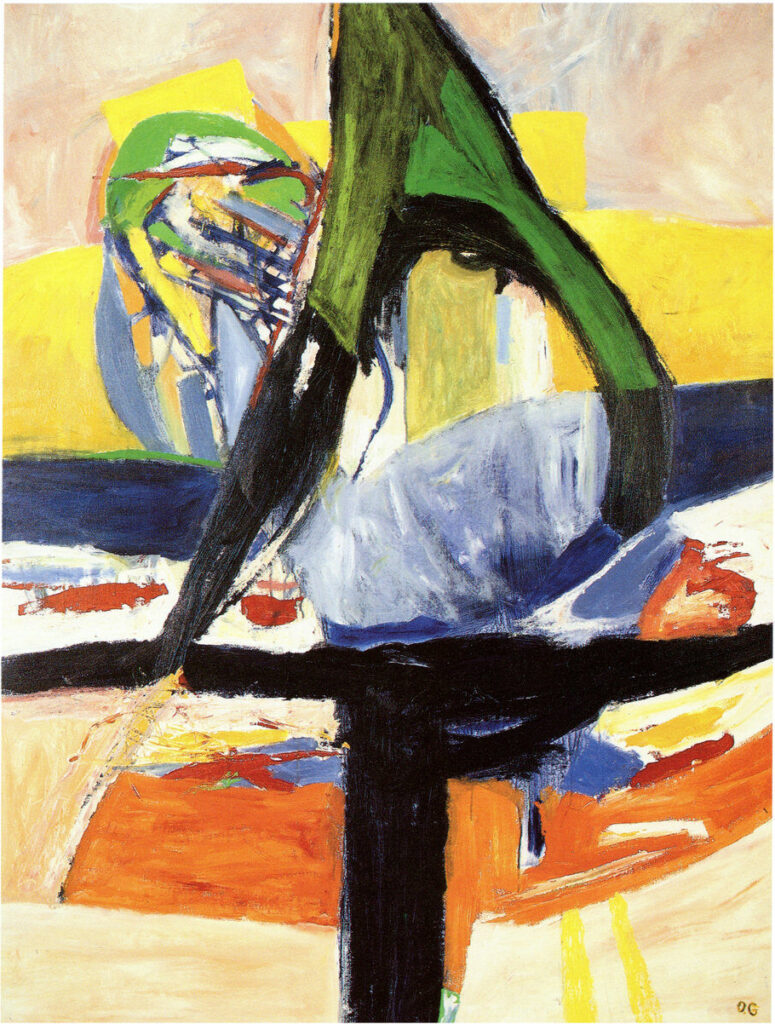
Hace cuatro años atrás, con mi primera exposición individual titulada «La inescrupulosa vida que nos susurra en la obscuridad», concluye una etapa en la evolución de mi pintura. Desde ese momento, comenzó sinuosamente a vislumbrarse lo que hoy es mi obra. Cuatro años de ininterrumpida mirada sobre los condominios pictóricos que yo creaba. Todo esto realizado con la paciencia de un cirujano; desmenuzando hasta el más mínimo detalle los elementos que conformaban mi pintura, y he ahí que rescaté la mancha que me orientaba hacia el paisaje.
Poco a poco la mancha antropomorfa fue sepultada bajo y sobre la línea del horizonte. Desembocando todo esto en una interminable secuencia de «Paisajes imaginarios», donde el sentido antropológico subyace inevitablemente en las estructuras urbano-rurales de estas pinturas. Atrás quedaron esas pinturas inundadas de virulencia y tormentos; arrollando seres mutilados, atormentados, desgarrados por la misma mancha.
Pero aquí aún subyacen, aún su aliento se encuentra desperdigado en estas atmósferas con nombre de cosa, animal o mujer. Estas atmósferas pictóricas que han resistido hasta el enceguecimiento la desesperada lucha de aquellos seres por volver a rehabitarlas.
Por más que intente, jamás podré alejar de mi pintura la presencia antropológica, el palpitar humano; en fin, la inescrupulosa vida.
(English)
When four years ago I had my first one-man show, titled «The Unscrupulous Life that Whispers to Us in the Darkness», a period in the evolution of my work was concluded. From that moment on, my actual technique slowly emerged. Four years of uninterrumpted study of the picturesque compositions which I created. My work was performed with the patience of a surgeon; analizing every detail within the elements of my paintings, and finally, extracting from this the stain that oriented me towards landscapes.
Little by little, this antropomorphous stain was buried beneath and above the horizontal line. The result being an endless sequence of «Imaginary landscapes» where the anthropological meaning inevitably underlies in the urban-rural structures of these paintings. Those paintings flooded with virulence and torment, were left behind; treading over mutilated, tormented beings, torn by the same stain.
However, they are still present and their breath is scattered in these atmospheres in the form of woman, animal or thing. These pictorial atmospheres have resisted until blindness the desperate struggle of those beings to return them to life. In spite of my efforts, I shall never be able to separate the anthropological presence, the human essence, from my paintings. In short, the unscrupulous life.
Omar Gatica Santiago, 1991
Listado de Obras (Catálogo Bilingüe)
A continuación, se detallan las obras del artista Omar Gatica incluidas en el libro, organizadas bajo la nomenclatura oficial de archivo:
- OG-OBRA-PINT-1985 – Omar Gatica – La Voltereta I / Somersault I, 1985. Óleo sobre tela, 130 x 120 cm.
- OG-OBRA-PINT-1987 – Omar Gatica – Visiones del Noctámbulo / Visions of a Nightwalking, 1987. Óleo sobre tela, 150 x 181 cm.
- OG-OBRA-PINT-1987 – Omar Gatica – Serpiente Emplumada / Feathered Snake, 1987. Óleo sobre tela, 150 x 105 cm.
- OG-OBRA-PINT-1989 – Omar Gatica – El No de los Niños / Children’s No, 1989. Acrílico sobre tela, 160 x 140 cm.
- OG-OBRA-PINT-1989 – Omar Gatica – Patriarca I / Patriarch I, 1989. Óleo sobre tela, 107 x 107 cm.
- OG-OBRA-PINT-1989 – Omar Gatica – Luna Asesina / Murderess Moon, 1989. Óleo sobre tela, 180 x 150 cm.
- OG-OBRA-PINT-1989 – Omar Gatica – Paisaje en el Sur / Landscape in the South, 1989. Óleo sobre tela, 200 x 140 cm.
- OG-OBRA-PINT-1989 – Omar Gatica – Atardecer / Evening, 1989. Óleo sobre tela, 154 x 155 cm.
- OG-OBRA-PINT-1989 – Omar Gatica – El último Inmortal / The Last Inmortal, 1989. Óleo sobre tela, 150 x 130 cm.
- OG-OBRA-PINT-1989 – Omar Gatica – El Árbol / The Tree, 1989. Acrílico sobre tela, 150 x 155 cm.
- OG-OBRA-PINT-1989 – Omar Gatica – El Faro / The Lighthouse, 1989. Acrílico sobre tela, 150 x 106 cm.
- OG-OBRA-PINT-1989 – Omar Gatica – La Tenaza / The Nipper, 1989. Acrílico sobre tela, 150 x 115 cm.
- OG-OBRA-PINT-1990 – Omar Gatica – Crepúsculo / Dawn, 1990. Óleo sobre tela, 167 x 150 cm.
- OG-OBRA-PINT-1990 – Omar Gatica – Cordillera / Cordillera, 1990. Óleo sobre tela, 167 x 150 cm.
- OG-OBRA-PINT-1990 – Omar Gatica – El Corazón Blanco y sus 19 Temores / The White Heart and its 19 Fears, 1990. Acrílico sobre tela, 165 x 200 cm.
- OG-OBRA-PINT-1990 – Omar Gatica – La Casa y el Cielo Rojo / The House and the Red Sky, 1990. Acrílico sobre tela, 164 x 110 cm.
- OG-OBRA-PINT-1990 – Omar Gatica – Arcoíris Sobre el Canal / Rainbow Over the Channel, 1990. Acrílico sobre tela, 164 x 122 cm.
- OG-OBRA-PINT-1990 – Omar Gatica – El Sol Sobre la Mesa / The Sun Over the Table, 1990. Acrílico sobre tela, 165 x 200 cm.
- OG-OBRA-PINT-1990 – Omar Gatica – La Calle / The Street, 1990. Acrílico sobre tela, 160 x 200 cm.
- OG-OBRA-PINT-1990 – Omar Gatica – El Puente / The Bridge, 1990. Acrílico sobre tela, 165 x 175 cm.
- OG-OBRA-PINT-1990 – Omar Gatica – El Gato / The Cat, 1990. Óleo sobre tela, 165 x 200 cm.
- OG-OBRA-PINT-1990 – Omar Gatica – La Silla y su Entorno / The Chair and its Surrounding, 1990. Acrílico sobre tela, 130 x 160 cm.
- OG-OBRA-PINT-1990 – Omar Gatica – La Ventana / The Window, 1990. Acrílico sobre tela, 154 x 150 cm.
- OG-OBRA-PINT-1990 – Omar Gatica – Dramático / Dramatic, 1990. Óleo sobre tela, 165 x 200 cm.
- OG-OBRA-PINT-1990 – Omar Gatica – El Ojo del Dragón / The Dragon’s Eye, 1990. Acrílico sobre tela, 160 x 165 cm.
- OG-OBRA-PINT-1990 – Omar Gatica – La Casa / The House, 1990. Óleo sobre tela, 155 x 155 cm.
- OG-OBRA-PINT-1990 – Omar Gatica – La Mesa y la Paleta / The Table and the Palette, 1990. Acrílico sobre tela, 160 x 175 cm.
- OG-OBRA-PINT-1990 – Omar Gatica – La Hoz sin Martirio / The Sickle without Martyrdom, 1990. Óleo sobre tela, 155 x 155 cm.
- OG-OBRA-PINT-1990 – Omar Gatica – Muro Azul / Blue Wall, 1990. Óleo sobre tela, 165 x 135 cm.
- OG-OBRA-PINT-1990 – Omar Gatica – Yto / Yto, 1990. Óleo sobre tela, 155 x 155 cm.
- OG-OBRA-PINT-1990 – Omar Gatica – La Casa en la Playa / The House at the Beach, 1990. Óleo sobre tela, 155 x 155 cm.
- OG-OBRA-PINT-1990 – Omar Gatica – Mujer / Woman, 1990. Óleo sobre tela, 165 x 135 cm.
- OG-OBRA-PINT-1990 – Omar Gatica – Cabeza / Head, 1990. Óleo sobre tela, 135 x 165 cm.
- OG-OBRA-PINT-1990 – Omar Gatica – Paisaje Femenino I / Female Landscape I, 1990. Óleo sobre tela, 200 x 300 cm.
- OG-OBRA-PINT-1991 – Omar Gatica – El Riachuelo / The Stream, 1991. Óleo sobre tela, 200 x 300 cm.
- OG-OBRA-PINT-1990 – Omar Gatica – Paisaje Femenino II / Female Landscape II, 1990. Óleo sobre tela, 200 x 300 cm.
- OG-OBRA-PINT-1991 – Omar Gatica – Ciudadela / Citadel, 1991. Óleo sobre tela, 200 x 160 cm.
- OG-OBRA-PINT-1991 – Omar Gatica – El Rostro / The Face, 1991. Óleo sobre tela, 200 x 160 cm.
- OG-OBRA-PINT-1991 – Omar Gatica – El Patriarca II / The Patriarch II, 1991. Óleo sobre tela, 135 x 160 cm.
- OG-OBRA-PINT-1991 – Omar Gatica – El Beso / The Kiss, 1991. Óleo sobre tela, 160 x 200 cm.
- OG-OBRA-PINT-1990 – Omar Gatica – Encrucijada / Crossroads (Portada), 1990. Óleo sobre tela, 165 x 135 cm.
Biografía y Reseña de Waldemar Sommer
Waldemar Sommer T. (Español) Chileno, nacido en 1932, miembro del Círculo de Críticos de Arte de Chile y de la Asociación Internacional de Críticos de Arte (A.I.C.A.). Desde el año 1975 tiene un importante espacio dedicado al arte en el Diario El Mercurio de Santiago de Chile. La vida del campo y la crítica musical son sus otras grandes pasiones. Se entiende entonces que el sentido melódico en el color de Gatica haya sido bien apreciado por Sommer.
(English) Chilean, born in 1932, member of the Art Critics Circle of Chile and the International Association of Art Critics (A.I.C.A.). From 1975 he has had an important column dedicated to Art in the newspaper El Mercurio of Santiago, Chile. Country life and music critique are his other great passions. It is clear, then, that Gatica’s melodical sense of colour was appreciated by Sommer.
Nota: Este ejemplar corresponde al número 407 de una edición de mil ejemplares revisados y firmados por el artista / This edition consists of one thousand copies, reviewed, numbered and signed by the artist. Copy no. 407.
Archivo de Libro
Ficha técnica :
Título: OMAR GATICA
Código: OG-LIBRO-1991
Editorial: Morgan Marinetti
Texto / Text: Waldemar Sommer
Traducción / Translation: Francisca Bustamante, Macarena Urzúa, Raquel Richardson
Fotografía / Photography: Patricia Novoa, Carlos Bravo
Diseño / Design: Jaime Peñaloza
Fecha: 1991
Enlace interno: omargatica.cl/libro-omar-gatica-1991
Enlace interno exposición: omargatica.cl/omar-gatica-galeria-praxis-1991
Documento PDF: Libro OMAR GATICA omargatica.cl/pdf/OG-LIBRO-1991_OMAR_GATICA.pdf
Anexo PDF: Invitación expo